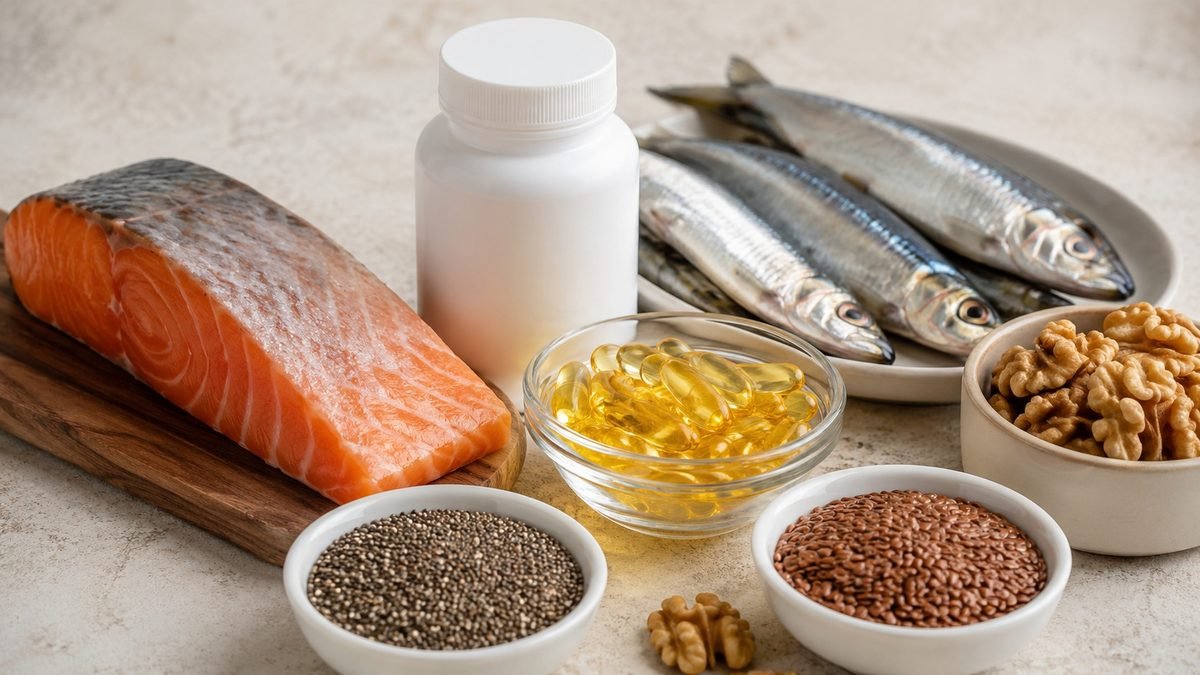
Omega 3 fatty acids come in three main types, and the differences decide what a label is really offering. EPA and DHA, the active forms found mainly in fish, do most of the work the research supports, while ALA from plants converts into them only inefficiently. So the big total omega 3 figure on the front of a pack matters far less than the EPA and DHA it actually contains.
The three types and where they come from
- EPA (eicosapentaenoic acid): a marine omega 3 studied in relation to heart health and inflammation, found in oily fish.
- DHA (docosahexaenoic acid): a marine omega 3 that is a structural part of the brain, nervous system and eyes, also from oily fish.
- ALA (alpha linolenic acid): a plant omega 3 from flaxseed, chia, walnuts and some oils, which the body converts to EPA and DHA only at a low rate.
Why the conversion gap matters
This is the point most labels gloss over. The body turns only a small percentage of ALA into EPA, and a much smaller fraction again into DHA. Plant sources of ALA are valuable and worth eating, but someone relying on ground flaxseed alone to supply DHA receives far less active omega 3 than the headline ALA number implies. This matters most for people who eat no fish, including vegans and many vegetarians, who cannot count on conversion to meet their EPA and DHA needs. For them, an algae based supplement supplies EPA and DHA directly, since algae are where the fish get it in the first place.
Reading a fish oil label
The large number on the front of a fish oil pack is usually the total weight of fish oil, not the amount of active omega 3. The figures that count, the EPA and DHA per serving, sit on the back, and you often need to add them together. Two products both claiming 1,000 mg of fish oil can deliver very different amounts of EPA and DHA, sometimes less than half the bottle in active omega 3. Turn the pack over, find the EPA and DHA, and compare those numbers across products and against the price.
Quality, freshness and purity
Omega 3 oils are delicate. They oxidise and turn rancid when exposed to heat, light, air and time, and an oxidised oil is unpleasant and of lower quality. A strong fishy smell, or a fishy taste that repeats on you, can be a sign the oil has degraded. Because fish can carry environmental contaminants, reputable brands purify their oil and may test it, so look for signs of purity testing where your market provides them. Store fish oil somewhere cool and dark, check the use by date, and do not stockpile more than you will use in good time.
Food first, as ever
For people who eat fish, food is the simplest route. A couple of servings a week of oily fish, such as salmon, sardines, mackerel, herring or trout, supplies EPA and DHA in a form the body handles well, often making a supplement unnecessary. Tinned oily fish is an affordable, convenient option that counts just as much. A supplement earns its place mainly for people who do not eat fish, follow a plant based diet, or have a specific need identified with a professional.
Dosing and expectations
Sensible general intakes focus on getting a regular, modest amount of EPA and DHA rather than chasing very high doses. Higher therapeutic doses are sometimes used under medical supervision for specific conditions, which is different from general wellbeing use. Bear in mind that omega 3 can thin the blood slightly at higher doses, which matters before surgery or alongside anticoagulant medicines. As with most nutrients, a steady reasonable intake serves most people better than an aggressive dose.
How much EPA and DHA you need
Rather than a single universal number, most guidance points to a regular, modest intake of EPA and DHA, often framed as a couple of servings of oily fish a week, which works out to a steady weekly amount of the active omega 3s. People who do not eat fish can aim for a similar amount from an algae based supplement. When you compare supplements, add the EPA and DHA per serving and check how that stacks up against this kind of weekly target, rather than being swayed by the total fish oil figure on the front. Specific medical situations sometimes call for higher, supervised doses, but for general wellbeing the message is consistency at a sensible level rather than the largest dose you can find.
Omega 3 and omega 6 balance
Omega 3 does not act alone. It sits alongside omega 6 fatty acids, which are also essential and come largely from vegetable oils, nuts and seeds. Modern diets in many countries supply plenty of omega 6 and relatively little omega 3, and some researchers argue the balance between the two matters for inflammation and health, though the topic is debated and far from settled. The practical takeaway avoids the arguments: rather than fixating on a precise ratio, most people benefit simply from eating more omega 3 rich foods such as oily fish, walnuts and seeds, while leaning less on heavily processed foods. Lifting your omega 3 intake is more useful and more achievable than trying to engineer an exact ratio.
Frequently asked questions
What is the difference between EPA, DHA and ALA?
EPA and DHA are the active marine omega 3 fatty acids from fish, doing most of the studied work. ALA is a plant omega 3 the body converts to EPA and DHA only inefficiently.
Is the total fish oil number on the label what matters?
No. The front number is usually total fish oil. The amounts that count are the EPA and DHA per serving on the back, which you often need to add together to compare products fairly.
Can vegans get enough omega 3?
Plant foods supply ALA, which converts poorly to EPA and DHA. Vegans who want a reliable source of the active forms can use an algae based supplement, which provides EPA and DHA directly.
Do I need a fish oil supplement if I eat fish?
Often not. Two servings of oily fish a week supply EPA and DHA well, so a supplement is most useful for people who do not eat fish or have a specific need.
How should I store fish oil?
Keep it cool and dark, away from heat and light, and use it before the date on the pack. A strong fishy smell or repeating taste can mean the oil has oxidised.
How much omega 3 should I aim for?
Most guidance points to a regular, modest intake of EPA and DHA, often framed as a couple of servings of oily fish a week. People who do not eat fish can aim for a similar amount from an algae based supplement.
Is krill oil better than fish oil?
Krill oil delivers EPA and DHA in a slightly different form and is marketed as better absorbed, but the evidence for a meaningful advantage is limited and it usually costs more. Compare the actual EPA and DHA per serving and the price before deciding.
Related reading
- Understanding Combination Antioxidant Formulas
- Why Supplement Timing Depends on the Ingredient
- Supplement and Medicine Interactions: A Practical Checklist
Sources and further reading
Omega 3 supplements can thin the blood slightly and may matter before surgery or with anticoagulant medicines. This is general information, so check with your doctor if either applies to you.

Adreama Biotech
The Adreama Biotech editorial team prepares clear product and nutrition education using supplied labels, authoritative public health sources and a safety first review process.
View all articles