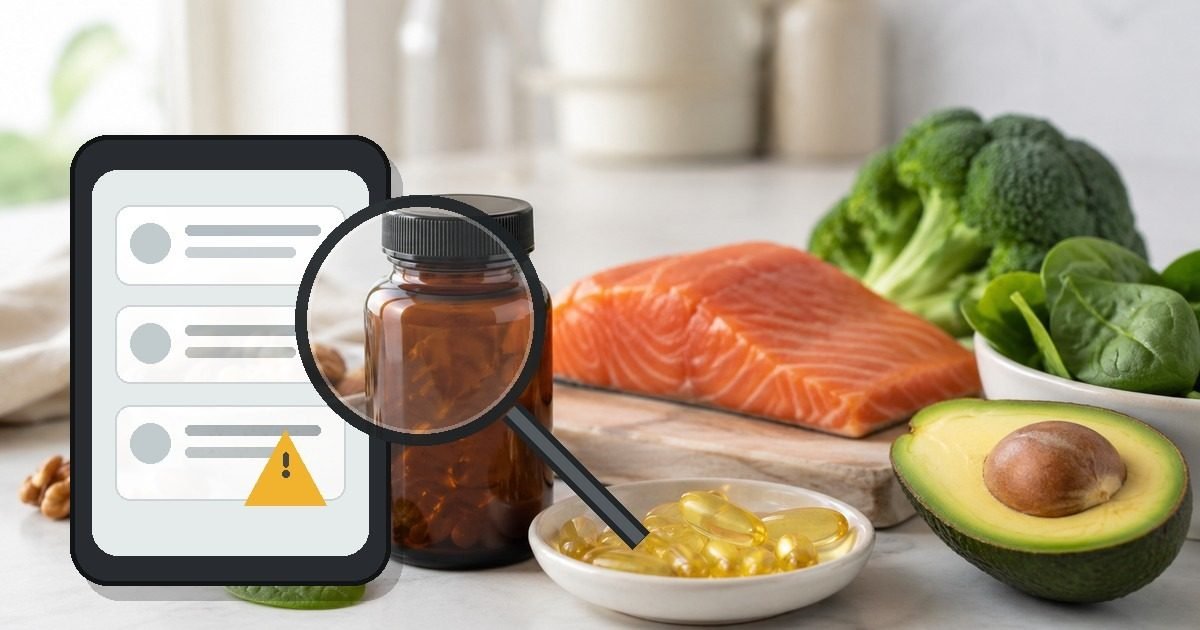
Misleading health claims follow patterns, and once you know the patterns you can spot them in seconds. The biggest warning sign is a product that promises a dramatic, fast and effortless result, because real nutrition rarely works that way and honest sellers do not pretend otherwise. A little healthy scepticism protects both your money and your health.
The red flags that recur
- Miracle language: words like cure, detox, melts fat or fixes everything. Bodies do not respond to a single product that way.
- Cure all breadth: a claim to treat many unrelated conditions at once signals marketing, not medicine, since real treatments are usually specific.
- Secret or suppressed: the idea that doctors or the establishment are hiding this from you is a sales hook, not evidence.
- Testimonials instead of trials: glowing stories and dramatic before and after photos stand in for the studies a real claim would cite.
- Too good to be true: if it promises results that sound impossible, that is usually because they are.
How to check a claim
Slow down and ask where the evidence actually sits. Look for references to real research rather than a vague nod to studies show. When a study is cited, notice whether it involved people or only cells in a dish or animals, since results in a test tube often do not carry over to humans. Check whether the dose used in any research matches what the product actually contains, because a tiny amount of an ingredient studied at high doses means little. A claim that cannot point to anything specific usually has nothing specific to point to.
Follow the money and the format
The way a claim is sold often reveals as much as the claim itself. Watch for affiliate links that pay the promoter when you buy, countdown timers and limited stock warnings designed to rush you, and a checkout that appears before any real information. These pressure tactics exist to stop you thinking and comparing. An honest health message survives a pause for research, while a scam depends on you not taking one. If a page is more interested in your card details than in explaining itself, that is the tell.
Spotting fake authority
Scams borrow the look of credibility. They invent impressive sounding titles, use logos that resemble real institutions, or feature a person in a white coat who turns out to be a paid actor. Some quote a named doctor or university that never made the claim, or twist a real study into something it never said. It pays to check whether a cited expert and institution actually exist and actually endorsed the product, rather than trusting the appearance of authority. Borrowed trust is one of the oldest tricks in selling.
Where to find trustworthy information
When you want to check something, go to sources that have no product to sell. National health services and major health bodies publish clear, balanced consumer information on vitamins, minerals and supplements, and they tend to state honestly when evidence is weak or uncertain, something a sales page never does. Comparing a bold marketing claim against what a reputable health authority says is one of the fastest ways to separate fact from hype. If the two disagree sharply, trust the source that is not trying to sell you anything.
A simple final test
When in doubt, ask whether a careful doctor or dietitian would phrase it the same way. Real guidance sounds measured, acknowledges uncertainty and rarely promises miracles. Hype sounds certain, sweeping and urgent, and it sells you something in the same breath. If a claim makes you feel you must buy right now or miss out, that urgency itself is the strongest reason to wait and check.
Where scams show up today
Misleading claims have moved with the times, and knowing where they appear helps you stay alert. Social media is now a major channel, where influencers and paid promoters present supplements inside lifestyle content that does not always look like advertising. Fake news style articles dress up a sales pitch as a health story, sometimes using the borrowed logos of real publications. Slick video testimonials and personal transformation stories spread quickly and persuade powerfully, despite proving nothing. The format keeps changing, but the underlying signals stay the same: a dramatic promise, a pressure to buy, an absence of solid evidence and a financial motive somewhere behind the message. Spotting those signals matters more than recognising any particular platform.
Protecting others who may be more at risk
Some people are more exposed to health scams than others, including those who are unwell, anxious about a condition, or less familiar with online sales tactics, such as some older relatives. A product that promises hope to someone facing a frightening diagnosis can be especially persuasive and especially harmful, particularly if it tempts them away from real treatment. Helping a relative pause and check a claim, or look it up against a reputable health source, is a kindness that can prevent both wasted money and real harm. Approaching it gently, as shared caution rather than criticism, tends to work better than simply telling someone they have been fooled.
Frequently asked questions
What is the biggest warning sign of a fake health claim?
A promise of dramatic, fast and effortless results. Real nutrition works gradually, and honest sellers do not claim a single product cures everything or melts fat overnight.
How can I check whether a supplement claim is true?
Look for real research rather than vague references, check whether studies involved people and used the same dose as the product, and compare the claim against what a reputable health authority says.
Are testimonials good evidence?
No. Personal stories and before and after photos are easy to select or fake and stand in for the proper studies a genuine claim would cite. Treat them as marketing, not evidence.
Why do these products use countdown timers and limited offers?
To rush you into buying before you think or compare. Pressure tactics are a warning sign, since an honest health message survives a pause for research.
Where can I find trustworthy supplement information?
National health services and major health bodies publish balanced consumer information and state honestly when evidence is weak. Sources with nothing to sell are more reliable than a product’s own marketing.
Are supplements promoted by influencers trustworthy?
Treat them with caution. Influencer and social media promotions are often paid and presented as lifestyle content rather than advertising. Judge the claim on its evidence and look for the same warning signs as anywhere else.
How can I help an older relative avoid health scams?
Gently encourage them to pause and check claims against a reputable health source, and offer to look things up together. Approaching it as shared caution rather than criticism tends to work better and can prevent wasted money and real harm.
Related reading
- What Bioavailability Means on a Supplement Label
- What Oxidative Stress Means Without the Hype
- Questions to Ask Before Buying a Multivitamin
Sources and further reading
This article helps you evaluate claims in general and is not medical advice. For decisions about your own health, rely on qualified professionals rather than online marketing.

Adreama Biotech
The Adreama Biotech editorial team prepares clear product and nutrition education using supplied labels, authoritative public health sources and a safety first review process.
View all articles