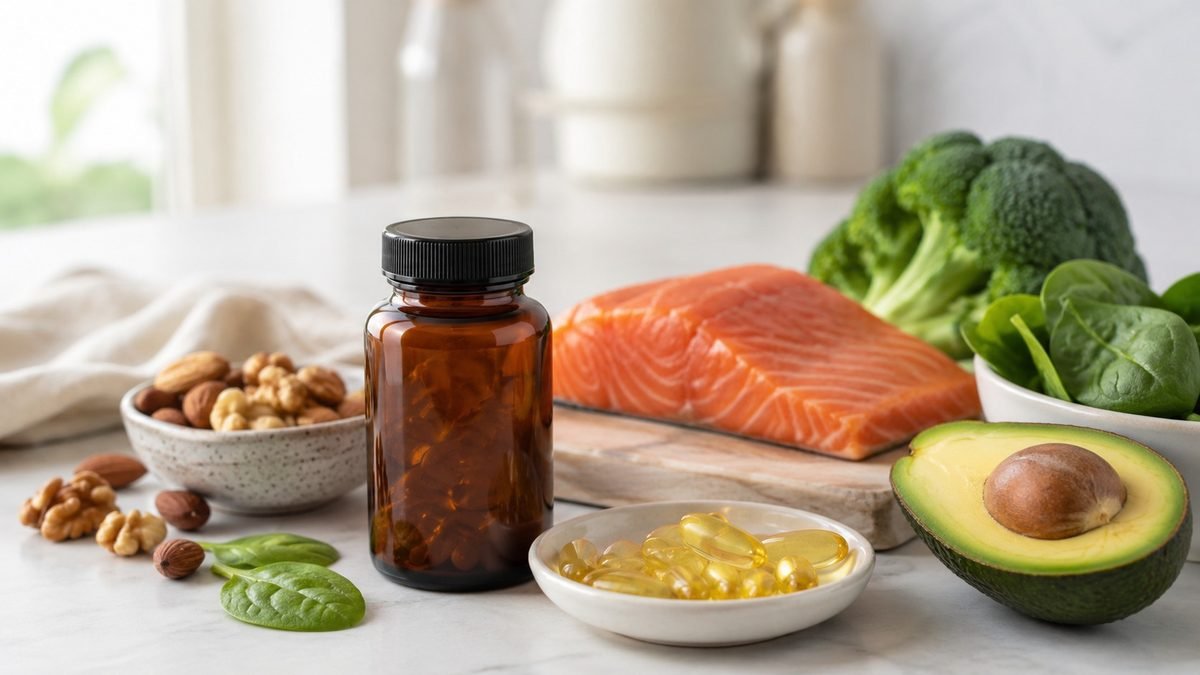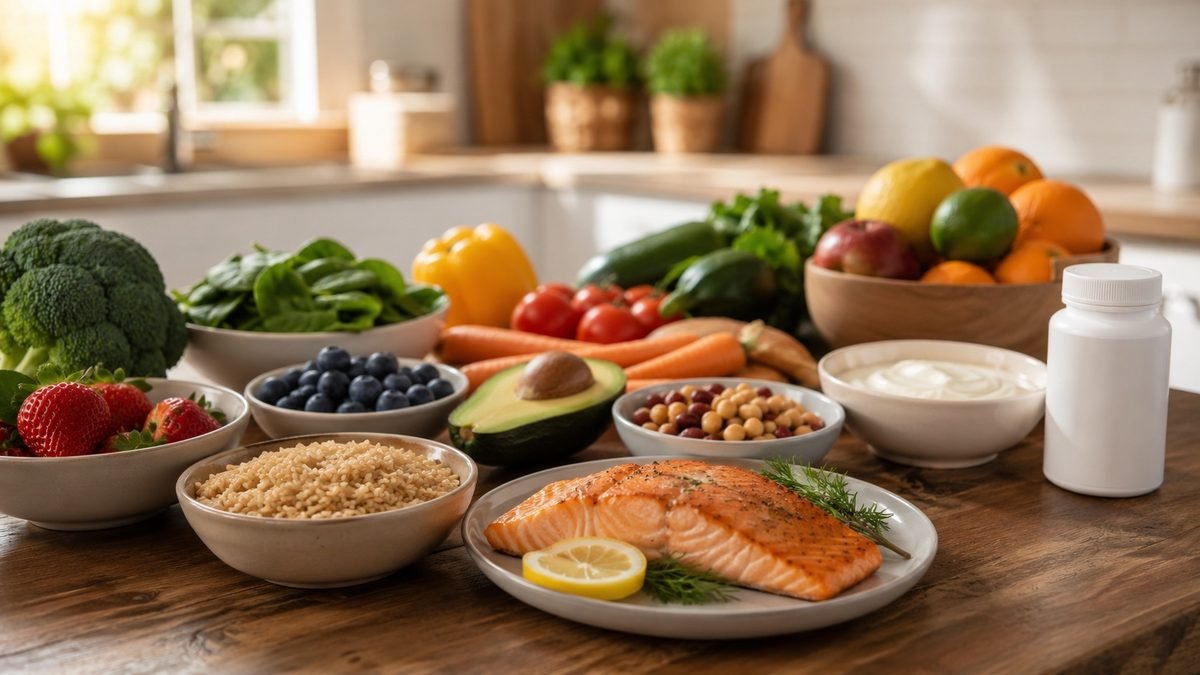
The phrase food first captures a simple priority: get your nutrients from meals where you can, and use supplements to fill the gaps that food leaves. Whole foods deliver vitamins and minerals alongside fibre, protein and a web of other compounds that a pill cannot copy, which is why food sits at the base and supplements sit on top. It is the most reliable principle in nutrition, and the one the supplement aisle most wants you to forget.
Why food outperforms a pill
An orange gives you vitamin C wrapped in fibre, water, potassium and a host of plant compounds that act together. A single nutrient capsule strips that context away and delivers one isolated molecule. Research repeatedly shows benefits tied to whole dietary patterns, such as diets rich in vegetables, fruit, wholegrains and legumes, that isolated supplements have struggled to reproduce. The lesson scientists keep drawing is that the package matters, not just the parts, and that nutrients in food often work in combinations we do not fully understand.
What a food first plate looks like
Global dietary advice, from many different health authorities, converges on a strikingly similar shape. Fill most of the plate with vegetables, fruit, wholegrains and legumes. Include some protein foods, whether from animals or plants. Use healthy oils, nuts and seeds. Keep heavily processed foods, free sugars and excess salt limited. This pattern, eaten consistently, covers most nutrient needs for most people without a single supplement, while also supplying the fibre and variety that pills cannot. The details vary by culture and cuisine, but the underlying shape is remarkably universal.
When supplements genuinely help
Food first does not mean food only. Real gaps exist, and supplements close them well in specific situations.
- Vitamin B12 for vegans and many older adults, since it comes naturally only from animal foods.
- Vitamin D in low sunlight months and at higher latitudes, where the skin cannot make enough.
- Folate before and during early pregnancy, where the need is high and timing is critical.
- Iron or other nutrients where a blood test or a professional has confirmed a shortfall.
In each case the supplement targets a known, specific gap, which is very different from taking a wide net of pills on the chance that one helps.
How to apply the principle
Look at your plate before your cupboard. Ask honestly which nutrients your usual diet might miss, based on what you actually eat rather than on advertising. A vegan should think about B12. Someone who rarely sees the sun should think about vitamin D. Someone planning a pregnancy should think about folate. Target a known gap with a specific product, rather than buying a supplement because a label promised energy or immunity. If you are unsure whether a gap is real, a test or a conversation with a professional answers it better than guesswork.
The cost angle
Food first is often kinder to your budget as well as your health. A drawer full of single supplements, blends and trendy powders adds up quickly, and much of it may duplicate nutrients you already get or chase benefits the evidence does not support. The same money spent on vegetables, fruit, legumes and a few staples buys far more nutrition, along with the fibre and satisfaction that pills cannot provide. Spending on the diet first, and supplementing only real gaps, tends to give better value as well as better results.
The mindset that serves you
Supplements supplement. They are a sensible patch over a specific hole, not a replacement for the variety, balance and fibre that meals provide, and they cannot turn a poor diet into a good one. Build the diet first, then add only what the diet genuinely cannot reach. That order, food first and supplements second, is the quiet principle behind almost every sound piece of nutrition advice.
What food first does not mean
It is worth clearing up a few misunderstandings, because food first is sometimes taken too far. It does not mean supplements are useless or that taking one is a failure. For genuine, well established gaps, such as B12 on a vegan diet or vitamin D in a dark winter, a supplement is the sensible, evidence based choice, and skipping it on principle would be a mistake. Food first also does not mean expensive or complicated eating. A varied diet built on affordable staples, vegetables, fruit, legumes, wholegrains and a little protein, fits most budgets and cuisines. The principle simply puts food in its rightful place as the foundation, with supplements as targeted tools, not as the other way round.
A simple gap audit you can do today
You do not need a laboratory to make a reasonable start. Spend a few minutes looking at what you actually eat in a normal week and at your circumstances. Do you eat any animal foods, or should you think about B12? How much sun do you really get, and what is the season where you live? Are you planning a pregnancy? Do you eat oily fish, or might omega 3 be thin? This quick self audit usually points to one or two areas worth a closer look, which you can then confirm with a test or a professional. It turns vague supplement shopping into a short, targeted list, which is both cheaper and more effective than buying broadly and hoping.
Frequently asked questions
Is it better to get nutrients from food or supplements?
From food where possible, because whole foods deliver nutrients alongside fibre and other compounds in natural proportion, and whole dietary patterns show benefits that isolated supplements often do not match.
When do I actually need a supplement?
Mainly for specific gaps, such as vitamin B12 for vegans, vitamin D in low sunlight months, folate around pregnancy, or a nutrient a test has shown you lack. Target the known gap rather than taking pills broadly.
Can a multivitamin replace a healthy diet?
No. A multivitamin cannot supply the fibre, protein and variety of real food, and the evidence that routine multivitamins improve health in well nourished people is weak. Diet comes first.
Are expensive superfood powders worth it?
Usually not. Ordinary vegetables, fruit, legumes and wholegrains provide excellent nutrition at far lower cost, without the inflated claims that often accompany trendy powders.
How do I know if my diet has a gap?
Look at what you regularly eat and your circumstances, such as diet type, sun exposure and life stage. If you are unsure, a blood test or a chat with a professional confirms a real gap better than guessing.
Is taking a supplement a sign of a bad diet?
Not at all. Some gaps are hard to fill from food alone, such as B12 on a vegan diet or vitamin D in winter, and a targeted supplement is the sensible choice there. Food first means food is the foundation, not that supplements are failures.
Does food first mean expensive eating?
No. A varied diet built on affordable staples such as vegetables, fruit, legumes and wholegrains fits most budgets, and it usually costs less than a drawer full of single supplements and trendy powders.
Related reading
- Questions to Ask Before Buying a Multivitamin
- Understanding Combination Antioxidant Formulas
- Supplement and Medicine Interactions: A Practical Checklist
Sources and further reading
Nutrient gaps differ by diet, life stage and health. This is general education, so use a test or a professional assessment to confirm a real need before adding a supplement.

Adreama Biotech
The Adreama Biotech editorial team prepares clear product and nutrition education using supplied labels, authoritative public health sources and a safety first review process.
View all articles