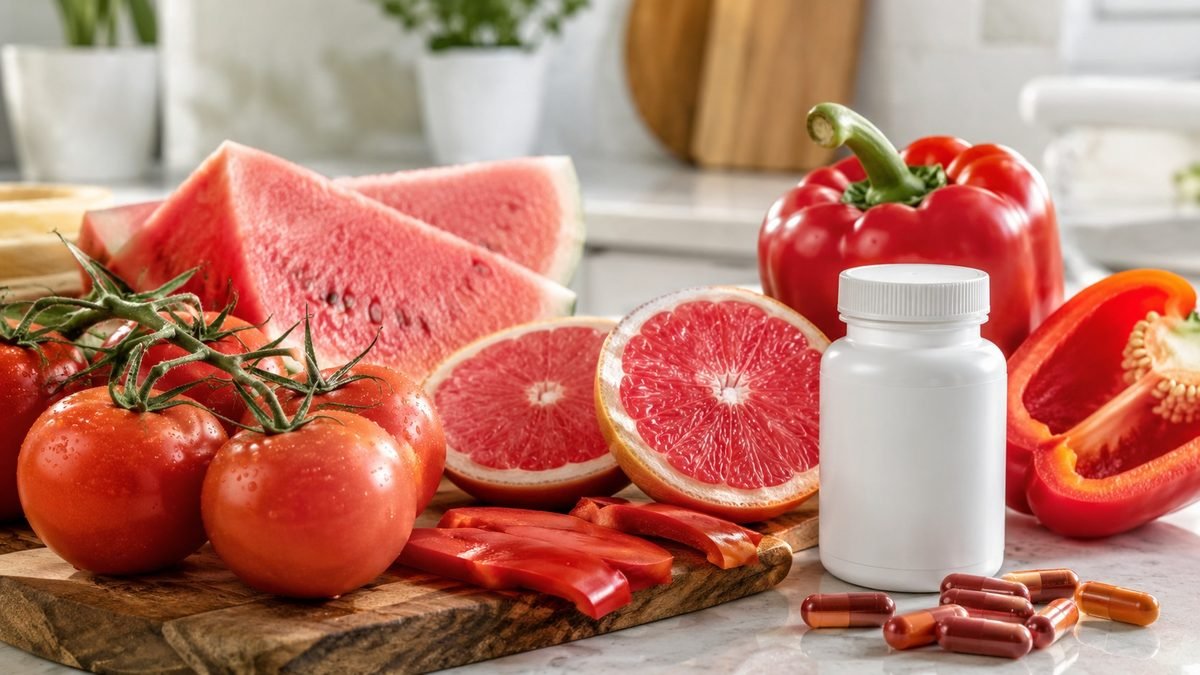
Lycopene is the pigment that makes tomatoes and watermelon red, and it works as an antioxidant in the body. Unlike most fresh produce nutrients, lycopene becomes more available when food is cooked and paired with fat, so a simmered tomato sauce delivers more usable lycopene than a raw tomato. That quirk shapes how best to get it and why the supplement is rarely the smart first choice.
What lycopene is and what it does
Lycopene belongs to the carotenoid family, the group of plant pigments that give many fruits and vegetables their red, orange and yellow colours. Unlike beta carotene, lycopene does not convert into vitamin A. Instead its main interest is as an antioxidant, a molecule that helps neutralise reactive compounds in the body. It has been studied in relation to heart health and to prostate health in men, though as with most single antioxidants the strongest signals come from diets rich in lycopene foods rather than from isolated supplements.
Where it comes from
- Cooked tomatoes, including paste, passata, sauce and tinned tomatoes, by far the richest everyday source.
- Watermelon and pink grapefruit.
- Guava and papaya.
- Red peppers, in smaller amounts.
Processing concentrates lycopene, which is why tomato paste outranks a fresh salad tomato gram for gram. A bowl of tomato based pasta sauce can deliver far more lycopene than slicing a raw tomato onto a sandwich.
Why cooking and fat help
This is the part that surprises people, since cooking usually reduces nutrients. Heat breaks down the tough plant cell walls that lock lycopene away, freeing more of it for absorption, and it also shifts the lycopene into a form the body takes up more readily. Because lycopene is fat soluble, a drizzle of olive oil on that tomato sauce raises uptake further still. It is a neat case where the traditional kitchen approach, simmering tomatoes with a little oil, happens to match the science almost perfectly. Raw tomatoes still count, but they give up less of their lycopene.
Supplement forms and the evidence
Lycopene appears in softgels, often alongside other antioxidants in combination formulas aimed at general wellbeing or at men’s health. The research on isolated lycopene supplements is mixed. Some observational studies link lycopene rich diets with better outcomes, but trials of extracted lycopene in a pill have not consistently reproduced those benefits, which is a familiar pattern across single antioxidant supplements. A whole food carries lycopene alongside fibre, vitamin C and a host of other compounds that a capsule strips away. For most people, a few servings of cooked tomato products each week make more sense than a standalone pill.
Reading the label
If you do choose a supplement, check the lycopene amount per serving and whether it sits in an oil base, which aids absorption of a fat soluble compound. Be cautious of broad antioxidant or men’s health claims that outrun the evidence, and watch combination formulas for overlap with other products you take. As with other antioxidants, more is not automatically better, and the strongest case still points back to food.
A sensible approach
Treat lycopene as a reason to enjoy tomato based dishes rather than as a pill to chase. Cooking tomatoes with a little oil, eating watermelon in season, and including a variety of colourful produce gives you lycopene in the company nature intended, along with everything else those foods provide. If you have a specific health goal, discuss it with a professional rather than relying on an antioxidant supplement to deliver it.
Simple ways to get more lycopene from food
Because cooking and a little fat unlock lycopene, a few easy habits raise your intake without any supplement. Use tinned tomatoes, passata or tomato paste as the base of sauces, soups and stews, and add a splash of olive oil while they cook. Roast tomatoes alongside other vegetables. Enjoy watermelon and pink grapefruit in season. Even a simple tomato based pasta sauce, simmered with oil, delivers a generous amount. These approaches cost little, taste good, and give you lycopene in the whole food form that the evidence most consistently supports, alongside the fibre, potassium and vitamin C that come with it.
Lycopene is one of many carotenoids
It helps to see lycopene as one member of a large family of colourful plant compounds rather than a single hero nutrient. Beta carotene, lutein, zeaxanthin and others each have their own roles, and they tend to travel together in brightly coloured fruits and vegetables. This is part of why a varied, colourful plate tends to outperform any single isolated compound in a capsule: you get the whole spread of carotenoids and their supporting nutrients in natural proportion. Eating a range of red, orange, yellow and dark green produce is a more reliable strategy than singling out lycopene to supplement, and it covers far more ground nutritionally.
Frequently asked questions
Is cooked tomato better than raw for lycopene?
Yes. Cooking breaks down cell walls and frees more lycopene for absorption, and pairing it with a little fat helps further. Tomato paste and sauce are especially rich sources.
Do lycopene supplements work?
The evidence is mixed. Lycopene rich diets are linked with some benefits, but isolated lycopene supplements have not consistently shown the same results, so food is the more reliable source.
What foods are highest in lycopene?
Cooked and processed tomatoes such as paste, passata and sauce lead by a wide margin, followed by watermelon, pink grapefruit, guava and papaya.
Does lycopene help with prostate health?
It has been studied in that context, with mixed results from supplements. A diet rich in tomato products is a reasonable part of overall health, but discuss specific concerns with a doctor rather than relying on a pill.
Should I take lycopene with food?
Yes, ideally with some fat, since lycopene is fat soluble and absorbs better that way. This is also why cooking tomatoes with oil is so effective.
Is lycopene the same as beta carotene?
No. Both are carotenoids, but beta carotene converts into vitamin A in the body, while lycopene does not. Lycopene’s main interest is as an antioxidant, and it gives tomatoes and watermelon their red colour.
Can I get too much lycopene?
Lycopene from food is considered safe, and very high intakes may temporarily tint the skin, which is harmless. As with other antioxidants, there is no benefit in chasing large supplement doses.
Does tomato ketchup count as a lycopene source?
It contains lycopene because it is made from cooked concentrated tomatoes, but it is also often high in added sugar and salt, so whole or tinned tomatoes, passata and paste are better everyday choices.
Related reading
- Understanding Combination Antioxidant Formulas
- Vitamin A: Food Sources, Forms and Safety Basics
- What Oxidative Stress Means Without the Hype
Sources and further reading
Evidence on isolated lycopene supplements is mixed. This article is general nutrition education, so treat product claims sceptically and ask a professional before relying on a supplement for a health goal.

Adreama Biotech
The Adreama Biotech editorial team prepares clear product and nutrition education using supplied labels, authoritative public health sources and a safety first review process.
View all articles