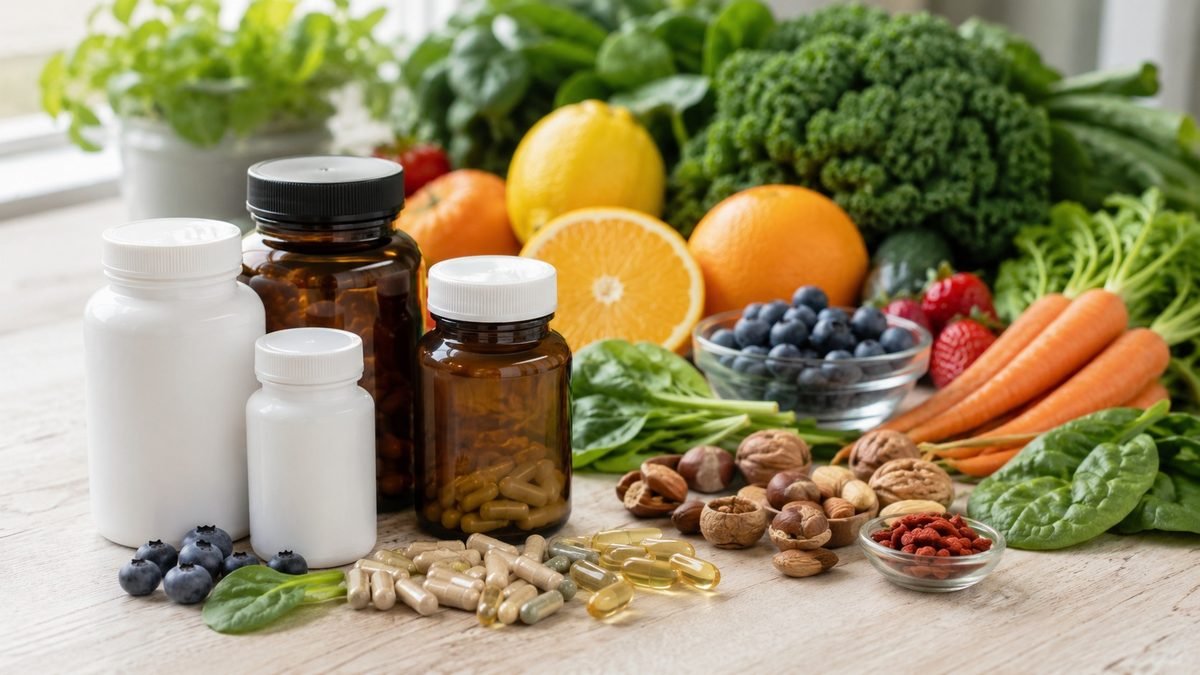
Combination antioxidant formulas bundle several nutrients, often vitamin C, vitamin E, selenium, zinc and a few plant extracts, into one pill. The pitch sounds efficient, but bundling carries a real risk: it becomes easy to exceed a safe amount of one ingredient while chasing the others, and the dose of any single nutrient is often too low to matter. Reading these products well means looking past the long ingredient list to the numbers that count.
Why brands bundle antioxidants
Antioxidants work as a network in the body, so combining them has a logical ring to it, and the marketing leans hard on that idea with words like complete and advanced. The trouble is practical. A formula juggling eight or ten ingredients usually cannot deliver a meaningful dose of each without becoming a handful of large pills, so several entries end up as token amounts that look impressive on the label and do little in the body. A long list is easy to print and hard to make effective.
The hidden double dosing trap
The biggest risk with these blends is stacking. If you already take a multivitamin, a separate vitamin C and an antioxidant complex, the same nutrients add up across all three. Selenium and zinc are the ones to watch most closely, since both have genuine upper limits and both turn up in many formulas, as does vitamin A. Add the totals across everything you take, including any fortified foods, before you trust a single label, because the overdose risk lives in the sum, not in any one product.
Reading a blend critically
- Check each elemental amount, not just that an ingredient is present.
- Watch for a proprietary blend, a single combined weight that hides how much of each ingredient you actually get.
- Compare against upper limits for selenium, zinc and vitamin A in particular.
- Be sceptical of long lists at tiny doses, which favour marketing over effect.
What the evidence actually says
This is where enthusiasm meets reality. Large trials of high dose antioxidant supplements have repeatedly failed to show the broad benefits the theory predicted, and a few pointed to harm at high doses, most notably high dose beta carotene raising lung cancer risk in smokers. The protective signal keeps pointing back to antioxidant rich whole foods rather than to concentrated pills, which suggests the benefit lives in the whole package of a varied diet, not in isolated compounds at high doses. A colourful plate of fruit and vegetables remains the better bet than a crowded capsule.
The exception: specific studied formulas
There is a meaningful exception worth knowing. Certain antioxidant and mineral combinations have been studied for specific conditions in specific groups, such as particular formulas examined for a named eye condition under medical supervision. These are targeted, evidence based uses guided by a professional, not general wellbeing products bought on a hunch. If a doctor has recommended a specific formula for a specific reason, that is a different situation from picking a broad antioxidant blend off the shelf because it promises vitality.
When a blend might suit you
For a healthy person eating reasonably well, a broad antioxidant blend rarely earns its place. It may make sense where a professional has identified a particular need, or as a convenient way to cover a couple of genuine gaps, provided the doses are adequate and you are not doubling up elsewhere. Outside those cases, the money usually buys reassurance rather than a measurable benefit.
How to compare against what you already take
Before adding any antioxidant blend, lay out everything else on your shelf and add up the overlapping nutrients. If your multivitamin already supplies the selenium, zinc and vitamins C and E that the new blend contains, the blend may push you toward upper limits while adding nothing useful. A few minutes with the labels side by side often reveals that the blend is redundant, which is the cheapest health decision you can make.
Antioxidants are not all interchangeable
Part of the problem with broad blends is the assumption that antioxidant is a single property you can simply pile up. In reality, different antioxidants do different jobs in different parts of the body. Some work in watery environments, others in fatty ones such as cell membranes. Some are made by the body, others come only from food. They also hand off to one another in a relay, so they depend on balance rather than sheer quantity. A blend that throws together large doses of several, with no regard to how they interact, is not the same as the orchestrated mix you get from a varied diet. This is why the concept of a total antioxidant score on a label tells you far less than it seems to.
A smarter way to get your antioxidants
If the goal is genuinely better antioxidant intake, the most reliable route is also the simplest and cheapest. Eat a wide range of colourful fruits and vegetables across the week, since the colours themselves often signal different antioxidant compounds. Add herbs, spices, tea, nuts, seeds and wholegrains, all of which carry their own. This approach delivers antioxidants in natural proportion, alongside fibre and other nutrients, and it sidesteps the overdose risk that comes with concentrated pills. Rather than auditing a complex blend for adequate doses and dangerous overlaps, you can simply build a varied plate and let food do the work it does best.
Frequently asked questions
Are combination antioxidant supplements worth taking?
For most healthy people eating well, no. They often contain token doses, and large trials of high dose antioxidants have not shown broad benefits. A varied diet rich in colourful produce is more reliable.
Can antioxidant supplements be harmful?
High doses can be. Some trials suggested harm, such as high dose beta carotene raising lung cancer risk in smokers. Stacking blends can also push selenium, zinc or vitamin A toward unsafe totals.
What is a proprietary blend?
It is a single combined weight listed for several ingredients without saying how much of each you get. It hides the individual doses, making it hard to judge whether any ingredient is present in a useful amount.
Why do whole foods beat antioxidant pills?
Foods deliver antioxidants alongside fibre and many other compounds in natural proportion, and the body seems to benefit from that whole package rather than from isolated compounds at high doses.
How do I avoid taking too much from combination products?
Add up the overlapping nutrients across your multivitamin, single supplements, blends and fortified foods, and compare the totals against the upper limits for selenium, zinc and vitamin A.
Does a higher antioxidant score on a label mean a product is better?
Not really. Antioxidants do different jobs in different parts of the body and work in balance, so a single total score tells you little. A varied diet provides them in natural proportion better than a high score on a pill.
Are there any antioxidant blends backed by good evidence?
A few specific combinations have been studied for particular conditions in particular groups, under medical guidance. Those targeted, evidence based uses differ from general wellbeing blends bought off the shelf on a hunch.
Related reading
- What Oxidative Stress Means Without the Hype
- Food First Nutrition and the Role of Supplements
- Supplement and Medicine Interactions: A Practical Checklist
Sources and further reading
Combination formulas make it easy to overshoot single nutrients. This is general information, so total your intake across all products and check it with a pharmacist before relying on a blend.

Adreama Biotech
The Adreama Biotech editorial team prepares clear product and nutrition education using supplied labels, authoritative public health sources and a safety first review process.
View all articles