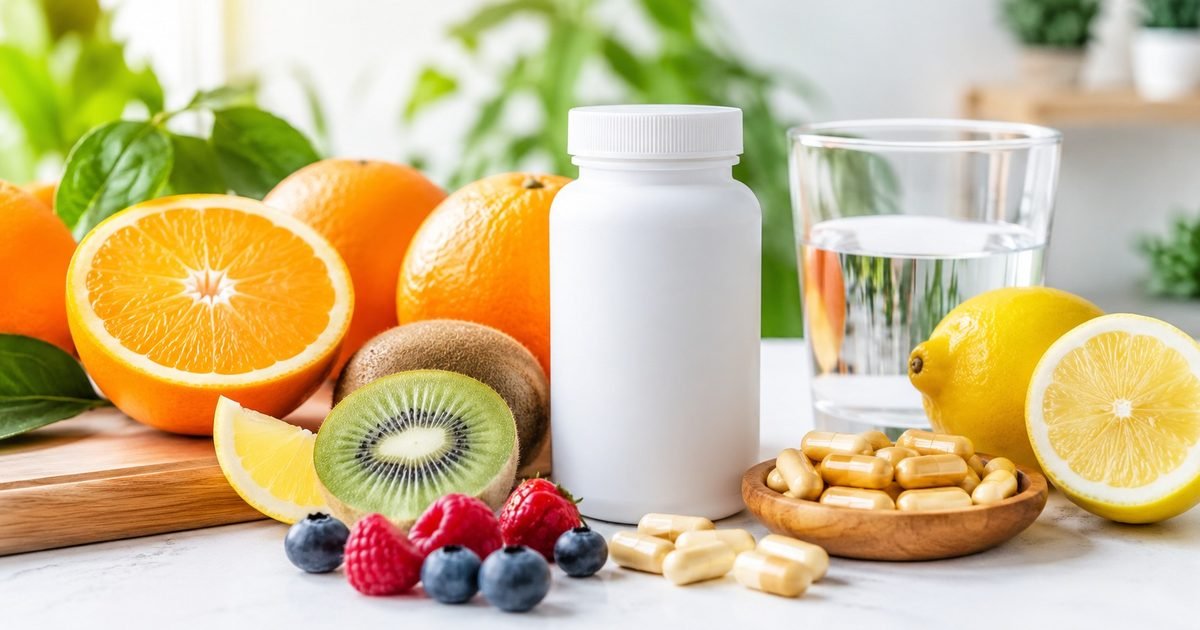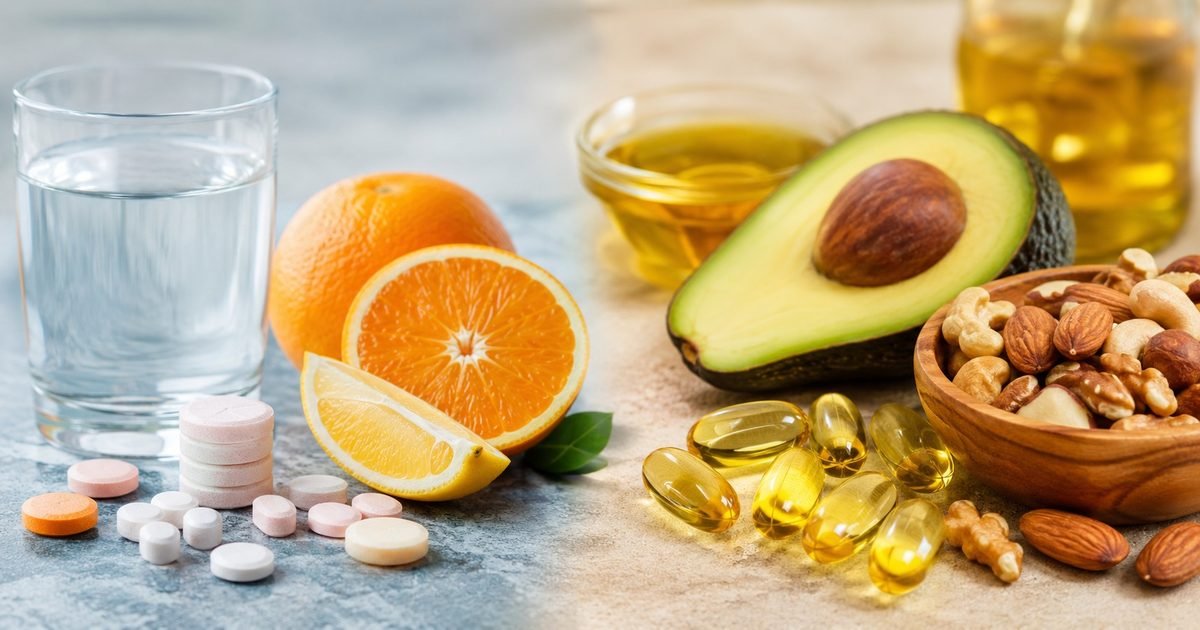
Vitamins split into two camps that behave in opposite ways inside the body. Water soluble vitamins dissolve in water, travel freely and leave in urine, so the body stores little and needs regular topping up. Fat soluble vitamins dissolve in fat, store in the liver and fatty tissue, and build up if intake stays high. That single difference shapes how you eat them, how you take them, how you cook them and how you judge what is safe.
The water soluble group
This camp covers vitamin C and all the B vitamins, including thiamin, riboflavin, niacin, B6, folate and B12. Because the body holds only small reserves, a steady supply across the week matters more than a single large hit. Take a very large dose and much of the excess simply leaves in urine within hours. That does not make megadoses entirely free of consequence, since some, such as high dose B6 over long periods, can cause problems, but it does mean these nutrients suit regular, modest intake from varied food.
Why cooking can cost you
Water soluble vitamins leach into cooking water and break down with heat and light. Boil vegetables hard and pour the water away, and you tip a good share of their vitamin C and folate down the sink. Steaming, microwaving, quick stir frying, and using the cooking liquid in a soup or sauce all save far more. Storing produce cool and eating it fresh helps too, since these vitamins fade over time.
The fat soluble group
Vitamins A, D, E and K make up this camp. They need dietary fat to absorb well, and the body banks them in the liver and fatty tissue for later. Storage is useful, because you do not need a perfect daily intake to stay topped up. Storage also raises the stakes, because high intakes of vitamin A or vitamin D over months can climb to harmful levels in a way that vitamin C almost never does.
Storage cuts both ways
The same banking that protects you from a missed day means a steady excess accumulates quietly. This is why fat soluble vitamins carry meaningful upper limits and why a daily high dose, especially of vitamin A as retinol, deserves more caution than a daily high dose of vitamin C.
What the split means in practice
- Take fat soluble vitamins with a meal that contains some fat for noticeably better uptake.
- Spread water soluble vitamins through the week from varied food rather than chasing one big dose.
- Respect the upper limits on fat soluble vitamins, since they accumulate over time.
- Cook gently to protect the fragile water soluble vitamins.
- Bright yellow urine after a B complex is usually surplus riboflavin leaving, not a wasted dose.
Deficiency looks different in each camp
Because the body stores little water soluble vitamin, a shortfall can show up within weeks to months when intake drops, which is part of why scurvy, a vitamin C deficiency, appears relatively quickly without fresh food. Fat soluble deficiencies usually take longer to develop because the body draws on its stores, and they often relate to conditions that block fat absorption rather than to diet alone. The flip side is that fat soluble overdoses, while rare from food, are far more likely from heavy supplement use than water soluble ones.
A quick memory hook
Water soluble vitamins act like a daily delivery you keep restocking, used quickly and replaced often. Fat soluble vitamins act like a pantry you fill and draw down over time. Knowing which shelf a vitamin sits on tells you most of what you need about food pairing, cooking and safety.
The B vitamins are a family, not a single thing
It helps to remember that the water soluble camp is mostly a group of B vitamins, each with its own job, rather than one interchangeable nutrient. Thiamin, riboflavin and niacin help turn food into energy. B6 supports the nervous system and the making of red blood cells. Folate is the one that matters most before and during early pregnancy. B12 protects nerves and works with folate to build healthy blood. They often appear together in a B complex because they cooperate, but they come from overlapping yet different foods, which is why a varied diet covers the group better than chasing any single one.
Who should think hardest about each camp
Different people need to watch different shelves. Anyone eating little fresh produce risks running low on the water soluble vitamins, especially vitamin C and folate. Vegans and many older adults need a reliable B12 source. People who live at high latitudes or spend little time outdoors often fall short on the fat soluble vitamin D. Those with conditions that block fat absorption can struggle with all the fat soluble vitamins at once. Matching your own circumstances to the right camp tells you where to focus rather than supplementing blindly.
Frequently asked questions
Which vitamins are water soluble and which are fat soluble?
The water soluble vitamins are vitamin C and the B vitamins. The fat soluble vitamins are A, D, E and K. A common way to remember the fat soluble group is the letters A, D, E and K.
Can you overdose on water soluble vitamins?
It is harder, because the body excretes the excess, but it is not impossible. Very high long term doses of some, such as B6, can cause harm, so megadoses are still worth avoiding without a reason.
Why do fat soluble vitamins need to be taken with food?
They dissolve in fat, so a meal containing some fat carries them across the gut wall far more effectively than water alone. Taking them on an empty stomach wastes part of the dose.
Does cooking destroy vitamins?
It can reduce the water soluble vitamins, which are sensitive to heat, water and light. Gentle methods such as steaming, and using the cooking liquid, preserve more. Fat soluble vitamins are generally more stable to cooking.
Do I need to take fat soluble vitamins every day?
Not necessarily, because the body stores them. Consistent intake over time matters more than a perfect daily dose, though you should still respect the upper limits.
Is it true that you only need vitamin C from one orange a day?
A single orange supplies a large share of most people’s daily vitamin C, so a varied diet with fruit and vegetables usually covers it without a supplement. The exact amount depends on the fruit and your own needs.
Why do fat soluble vitamins carry more overdose risk than water soluble ones?
Because the body stores them rather than flushing the excess. A steady surplus of vitamin A or D builds up over time, while extra vitamin C or most B vitamins largely leaves in urine.
Related reading
- Daily Value, RDA and Upper Limit Explained
- Vitamin A: Food Sources, Forms and Safety Basics
- Vitamin C: Roles, Sources and Supplement Labels
Sources and further reading
This is general nutrition education. Individual needs vary with diet, health conditions and life stage, so treat any plan to take higher doses as a conversation for a doctor or dietitian.

Adreama Biotech
The Adreama Biotech editorial team prepares clear product and nutrition education using supplied labels, authoritative public health sources and a safety first review process.
View all articles