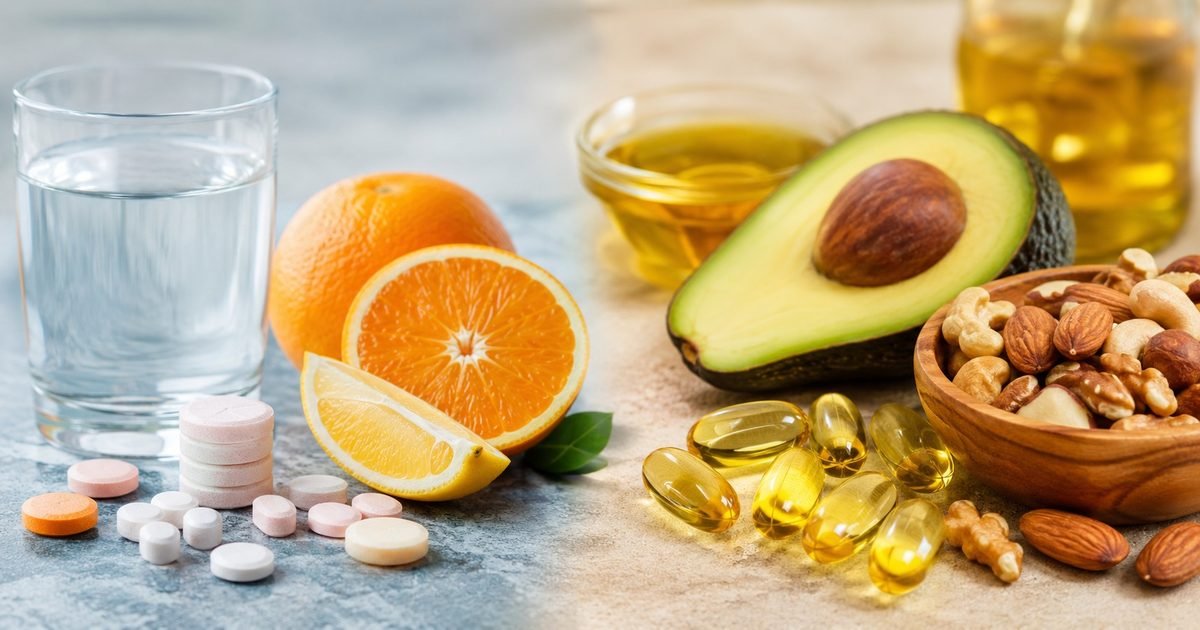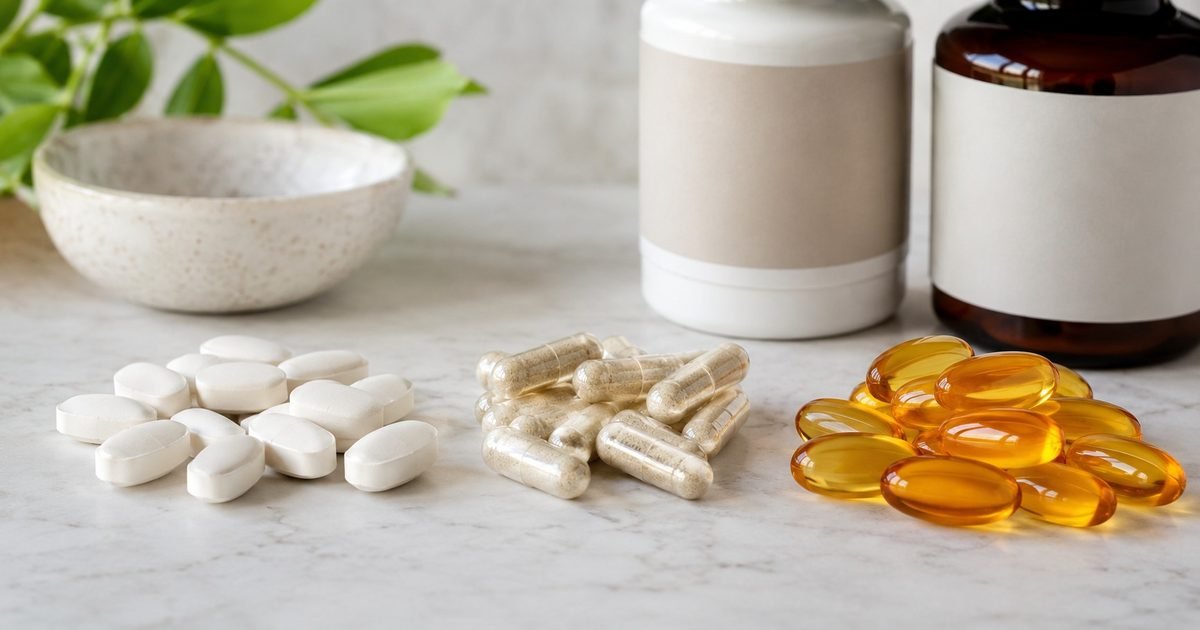
The shape on the front of a supplement pack answers a manufacturing question, not a quality one. A tablet, a capsule and a softgel of the same ingredient at the same dose hand your body the same amount of nutrient. What separates two products is the quantity of active nutrient per serving printed on the label panel, not the object you swallow. Once you understand what each format does well, comparing products anywhere in the world gets far simpler, and you stop paying extra for a shape that promises more than it delivers.
How a tablet is built
A tablet is powder pressed under high force, usually with binders that hold it together, fillers that give it bulk, and a disintegrant that helps it break apart once it lands in the stomach. Compression packs a large dose into a small object, which is why heavy minerals such as calcium and magnesium so often arrive as tablets. You would need a very large capsule to hold the same amount of calcium that a compact tablet carries.
Tablets are also the cheapest format to produce at scale and the most stable on a shelf, which keeps the price down and the expiry date sensible. The trade is that a densely pressed tablet has to break apart before anything can be absorbed, and a small number of cheap, poorly made tablets pass through barely touched. That is uncommon with reputable brands, but it is the reason some people feel a tablet “did nothing”.
What a coating actually does
Some tablets carry a coating, and the coating has a job. A simple film coat makes a tablet easier to swallow and masks a bitter taste. An enteric or delayed release coating survives stomach acid on purpose and dissolves further down, which protects ingredients that irritate the stomach or break down in acid. None of this makes the dose larger. Treat a coating as a delivery decision, not proof of strength, and never crush a coated tablet, because that cancels the very protection you paid for.
Where capsules earn their place
A hard capsule holds powder or small pellets inside a shell that splits into two halves. It skips heavy compression, hides taste and odour well, and lets a maker blend several ingredients or use slow release pellets in one unit. Many people find capsules easier to swallow than large tablets, and the contents tend to disperse quickly once the shell opens.
The shell itself tells you nothing about quality or potency. What matters is what sits inside and how much. If you avoid animal products, check the shell material, because the format alone will not say.
A note for vegetarian and vegan buyers
Traditional capsule shells use gelatin, which comes from animals. Plant based shells use cellulose, often labelled as hypromellose or HPMC, or sometimes pullulan. Labelling rules differ from country to country, so a product sold as suitable in one market may not carry the same wording in another. If this matters to you, look for a clear vegetarian or vegan statement and the named shell material rather than assuming.
What softgels do well
A softgel seals a liquid or oil inside one sealed piece. That makes it the natural home for fat soluble and oil based ingredients such as fish oil, vitamin D, vitamin E and coenzyme Q10, which sit dissolved in a carrier oil. Because the oil is already in solution, these ingredients often absorb smoothly, and the sealed shell shields fragile oils from oxygen, which slows the rancidity that ruins fish oil. Softgels also spare you the aftertaste that puts many people off liquid oils.
The limitation is the flip side of the strength. Softgels suit oils and liquids far better than dry powders, they cost more to make, and the gelatin shell can soften in heat. Vegetarian softgel shells exist but remain less common.
Chewables, gummies, liquids and powders
Beyond the big three, several other formats solve specific problems.
- Chewables and gummies help people who struggle to swallow pills, including children and many older adults. The catch is that gummies often carry added sugar and tend to hold lower doses, and the sweetness can turn a supplement into a treat that gets overeaten.
- Liquids allow flexible dosing and suit anyone who cannot swallow solids, though they can taste strong and usually have a shorter life once opened.
- Powders let you mix large doses into a drink, which works well for protein or creatine, but they demand accurate measuring and proper storage.
Does the format change absorption?
This is the question the marketing wants you to answer with your wallet. For most ingredients in healthy people, the format makes only a modest difference once the product dissolves properly. A 1,000 mg softgel and a 1,000 mg tablet of the same ingredient deliver the same 1,000 mg. Words such as “complex”, “advanced” or “rapid release” on the front are marketing language, not measurements.
Format matters most at the extremes. An oil based nutrient genuinely belongs in a softgel or taken with a fatty meal. A stomach irritant genuinely benefits from a delayed release coating. Outside those cases, a tablet, a capsule and a softgel of the same dose are close enough that you should choose on price, swallowability and storage rather than on a promise of superior absorption.
How to read and compare any label
Whatever the market or the format, the same three steps let you compare two products fairly.
- Serving size first. Decide whether the listed amount covers one unit or two or three. A “high strength” claim often hides behind a three tablet serving.
- Active amount per serving. Compare like with like, in the same units, and for minerals look for the elemental amount rather than the compound weight.
- Format last. Let it break a tie based on what you can swallow comfortably and store properly.
Storage and shelf life
Format affects how you should store a product. Oil filled softgels and gummies suffer in heat and humidity, so the bathroom cabinet is the worst place for them. Keep supplements somewhere cool, dry and dark, tighten the lid, and leave any silica gel sachet in the bottle, since it controls moisture. Check the expiry date when you buy, especially for fish oil and other oils that degrade with time.
Common mistakes to avoid
- Treating a softgel as automatically better absorbed than a tablet of the same ingredient.
- Crushing a coated tablet or opening a delayed release capsule, which destroys the coating.
- Comparing a single tablet product against a three tablet serving and calling the doses equal.
- Choosing gummies for a child without noticing the sugar and the lower dose.
- Storing oils in a hot, humid bathroom, which shortens their life.
Choosing the right format for you
Pick the format you will take consistently and store properly, then judge the product on the numbers in the panel. If you hate swallowing pills, a capsule or a liquid you take every day beats a tablet that sits untouched in a drawer. If you take an oil, reach for a softgel or pair the dose with a meal that contains fat. The best format is the one that gets the right dose into you reliably, day after day.
Frequently asked questions
Are capsules better absorbed than tablets?
Not as a rule. Capsules tend to open and disperse quickly, but a well made tablet dissolves and absorbs perfectly well. For most ingredients the difference is small, so choose on what you can swallow and afford.
Can I open a capsule or crush a tablet to make it easier to swallow?
Often yes for plain tablets and standard capsules, but never for coated or delayed release products, because crushing them removes protection the maker built in. If swallowing is hard, ask a pharmacist which of your products can be split or opened, or switch to a liquid or chewable.
Why are some supplements so large?
Minerals such as calcium and magnesium are heavy, so a full dose simply takes up a lot of space. Splitting the dose across two smaller tablets or choosing a more concentrated form can make them easier to take.
Do gummy vitamins work as well as tablets?
They deliver real nutrients, but they often contain less per piece and add sugar, and people tend to eat more than the stated serving because they taste good. They suit people who cannot swallow pills, with an eye on the dose and the sugar.
Does a higher price mean a better format?
No. Price reflects the format cost, the brand and the marketing as much as anything. Compare the active amount per serving across products before you decide a pricier one is worth it.
Related reading
- What Bioavailability Means on a Supplement Label
- Water Soluble and Fat Soluble Vitamins Explained
- Questions to Ask Before Buying a Multivitamin
Sources and further reading
This article explains dosage forms in general terms rather than advising on a specific product or dose. Follow the current label, and ask a pharmacist before you crush, split or change how you take anything, especially a prescribed medicine.

Adreama Biotech
The Adreama Biotech editorial team prepares clear product and nutrition education using supplied labels, authoritative public health sources and a safety first review process.
View all articles