Selenium is a trace mineral the body needs in tiny amounts to run its antioxidant defences and support thyroid function. Its defining feature is an unusually narrow safe range: the gap between not enough and too much is smaller than for almost any other nutrient, so casual high dosing is a genuine risk rather than a harmless habit. Understanding selenium is mostly about respecting that narrow window.
Why such small amounts do such big work
Selenium sits at the core of a family of proteins called selenoproteins. Several of these are enzymes that neutralise reactive molecules before they damage cells, while others help convert thyroid hormone into its active form. You need only micrograms a day, yet without them these systems cannot run properly. Both a shortfall and an excess cause problems, which places selenium among the nutrients to handle with care rather than to load up on.
Soil explains the global picture
Here is a fact that surprises people: the selenium in plant foods reflects the soil they grew in, and soil selenium varies enormously around the world. Some regions have selenium rich soils, so ordinary food easily covers needs, while others have poor soils, where deficiency has historically been a real concern. The same plate of food can therefore deliver quite different amounts of selenium depending on where the ingredients were grown. Where your food comes from shapes your selenium intake more than it does for most nutrients.
Food usually has it covered
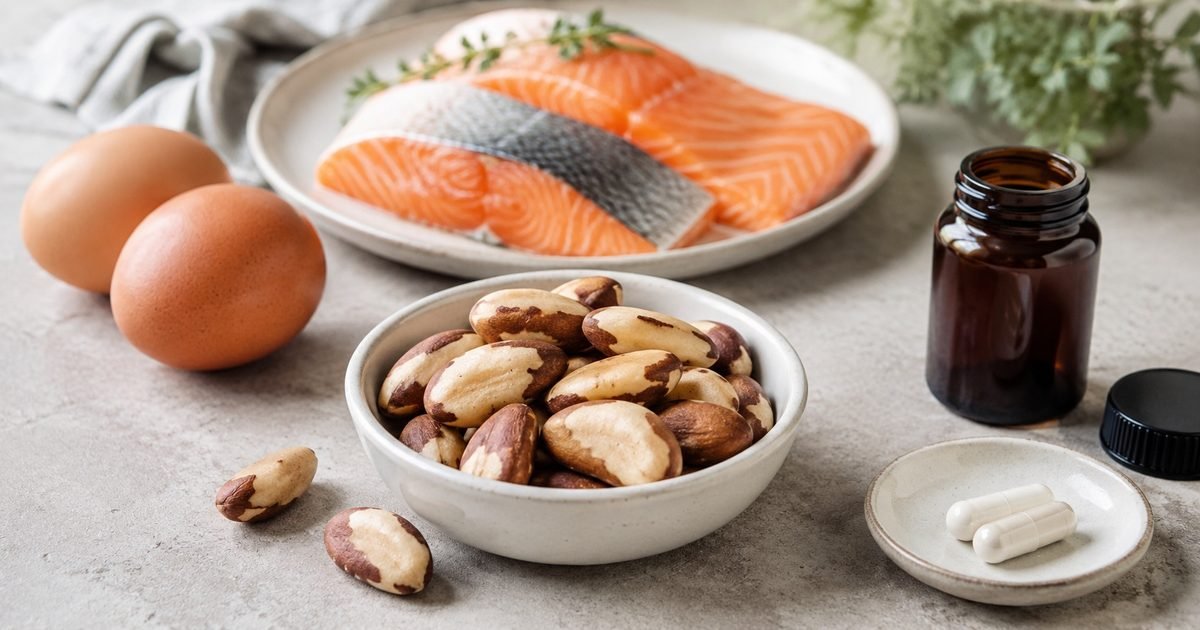
- Brazil nuts, so concentrated that one or two a day can meet daily needs on their own.
- Fish and seafood, reliable sources in most diets.
- Eggs, poultry and meat.
- Wholegrains, with the amount depending on the soil where they grew.
The Brazil nut trap
Brazil nuts deserve a special warning, because they vary enormously in selenium from nut to nut and region to region. A couple a day is a neat way to meet your needs. Eating a large handful every day, on top of a supplement and a varied diet, can quietly tip you over the upper limit with no warning sign at the time. Treat Brazil nuts as a potent supplement in shell form, not a snack to eat by the bowlful.
What too much selenium looks like
Excess selenium, a state called selenosis, has recognisable signs. A garlic smell on the breath, a metallic taste, brittle or breaking nails, hair loss, skin rashes and digestive upset can all appear with sustained overload. In severe cases it affects the nervous system. Because the safe window is so tight, these problems can develop from enthusiastic supplementing combined with a selenium rich diet, not only from extreme doses.
When a supplement makes sense
For most people eating a varied diet, especially one including some seafood, eggs and the occasional Brazil nut, food covers selenium without any pill. A standalone high dose selenium supplement makes sense mainly when a professional has identified a genuine need, for instance in certain medical situations. Selenium also comes up in discussions of thyroid health, where it should be guided by a doctor rather than self prescribed, given the narrow margin and the way it interacts with thyroid function.
How much you need
Adults need only micrograms of selenium a day, one of the smallest requirements of any nutrient, and a varied diet that includes some seafood, eggs, meat or the occasional Brazil nut covers it comfortably in most parts of the world. Because the requirement is so small and the safe ceiling so close above it, the practical goal is simply to meet your needs and stop there. This is the rare nutrient where aiming for plenty is the wrong instinct. If you take a multivitamin, check whether it already contains selenium before adding any standalone product, since the two together with a selenium rich diet can add up faster than you expect.
Selenium myths worth retiring
Selenium has attracted strong claims over the years, particularly around cancer prevention, after early studies hinted at a protective effect. Larger and more rigorous trials have not borne those hopes out, and in people who already have enough selenium, extra has shown no clear benefit and, in some research, possible harm, including a signal toward higher risk of type 2 diabetes at high intakes. The pattern mirrors other antioxidants: correcting a genuine deficiency helps, while piling supplements on top of sufficiency does not, and can backfire. Treat sweeping selenium health claims with caution, and let food rather than high dose pills do the work for most people.
Selenium and immune defence
Beyond the thyroid, selenium supports the immune system, partly through the same selenoproteins that handle oxidative stress. Immune cells rely on these enzymes to function and to manage the burst of reactive molecules they produce while fighting infection, so a genuine deficiency can blunt the body’s defences. This is the kernel of truth behind selenium’s immune marketing. The honest limit on that claim is the familiar one: topping up a real shortfall restores normal function, while adding selenium on top of an already adequate intake does not supercharge immunity and brings the narrow safety margin back into play. For people in selenium poor regions, ensuring enough is worthwhile. For everyone else, a varied diet quietly keeps the immune relevant enzymes supplied without any need to chase the mineral in pill form.
Frequently asked questions
How much selenium do I need?
Only micrograms a day, an amount a varied diet usually supplies. Because the safe range is narrow, meeting your needs matters more than taking extra.
How many Brazil nuts can I safely eat?
One or two a day generally meets selenium needs. Eating a large handful daily, especially alongside a supplement, can push you over the safe limit, so moderation matters.
Can you overdose on selenium?
Yes, more easily than with most nutrients because the safe range is so narrow. Signs of too much include a garlic breath smell, brittle nails, hair loss and digestive upset.
Does selenium help the thyroid?
Selenium supports the enzymes that activate thyroid hormone, so adequate levels matter for thyroid function. Supplementing for thyroid reasons should be guided by a doctor, given the narrow safety margin.
Do I need a selenium supplement?
Most people who eat a varied diet, including some seafood, eggs or the occasional Brazil nut, do not. A standalone supplement is best reserved for a need confirmed by a professional.
Related reading
- Selenium and Antioxidant Enzymes
- Zinc: Functions, Food Sources and Supplement Cautions
- Daily Value, RDA and Upper Limit Explained
Sources and further reading
- NIH Office of Dietary Supplements: selenium fact sheet
- NHS (UK): minerals including zinc and selenium
Selenium has an unusually narrow safe range. This article is general education, so treat any standalone selenium supplement as something to discuss with a health professional first.
Adreama Biotech
The Adreama Biotech editorial team prepares clear product and nutrition education using supplied labels, authoritative public health sources and a safety first review process.
View all articles