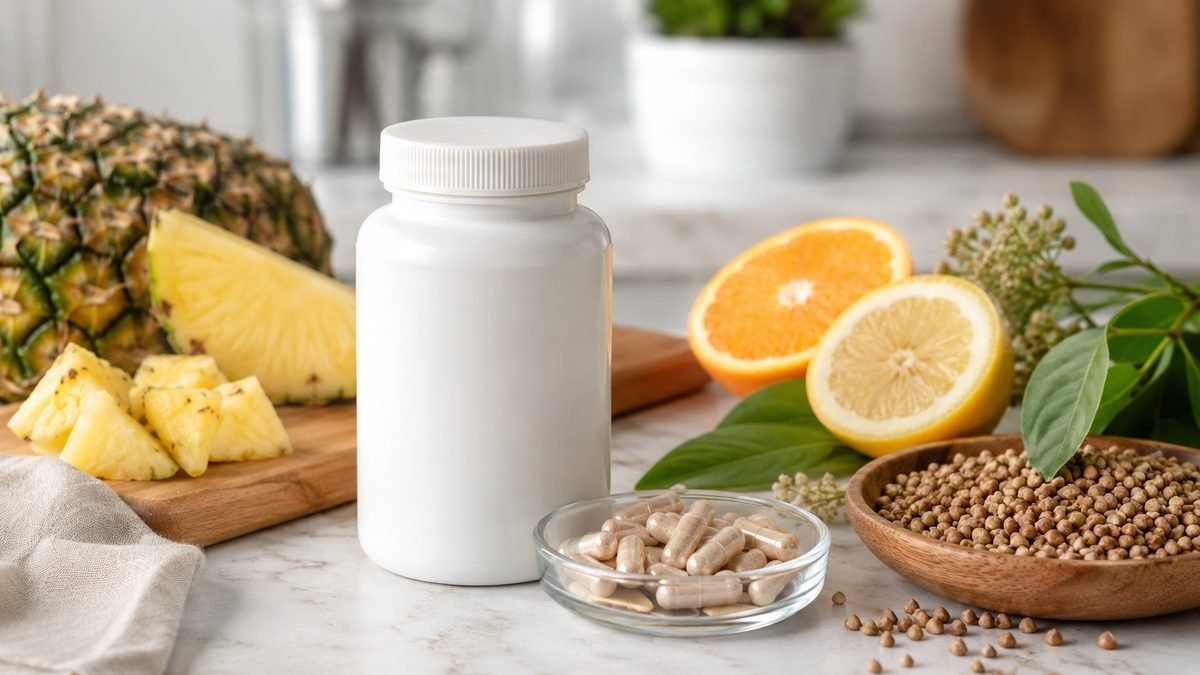
Bromelain, trypsin and rutoside appear together in combination supplements marketed for swelling and recovery. Reading these labels well means understanding that you are buying a fixed blend of enzymes and a plant compound, often at doses you cannot adjust, with evidence that is promising in places and thin in others. A clear head about what is proven and what is hopeful keeps your expectations and your spending sensible.
What each ingredient is
- Bromelain: a group of protein digesting enzymes extracted from pineapple, studied for swelling and for digestion.
- Trypsin: a protein digesting enzyme the body also produces itself in the pancreas, included here in supplement form.
- Rutoside: a plant flavonoid, also called rutin, included for its effects on small blood vessels and capillary health.
Together they are sold as a systemic enzyme blend, the idea being that the components are absorbed and act around the body rather than only in the gut.
Why they are combined
The blend is marketed mainly around swelling and recovery after injury or surgery, with the theory that the enzymes and the flavonoid work together to ease swelling and support healing. Some clinical research supports a role in managing swelling in certain situations, which is why such products are used in some countries as part of recovery care. The results vary between studies, though, and the strongest marketing claims tend to outrun the actual evidence. The honest position is that the combination is plausible and supported in places, rather than firmly proven for general use.
Reading the label carefully
Enzyme products come with their own labelling quirks. Activity is often stated in special enzyme units rather than plain milligrams, which makes comparing brands awkward, since the same milligram figure can represent different activity. Coatings matter too, because stomach acid can break enzymes down, so some products use a protective coating to help the enzymes survive into the intestine. Check the activity units, whether the product is coated, and whether a proprietary blend is hiding how much of each ingredient you actually get. A long impressive name means little without these details.
Safety points worth raising
This blend is not free of cautions. Bromelain can thin the blood slightly and may interact with anticoagulant medicines and with some antibiotics, potentially changing how they work. People with a pineapple allergy should avoid bromelain. Anyone facing surgery should mention these enzymes to their care team well in advance, since their blood thinning potential matters around an operation and timing needs planning. As with any supplement, anyone on regular medication should check for interactions before starting.
What the evidence supports, and what it does not
It is worth being clear eyed. These enzyme blends may help some people manage swelling as part of broader care, and that is the basis for their use in certain settings. They are not, however, a substitute for proper treatment of an injury, and the broad claims some products make about detoxification, inflammation throughout the body or general wellbeing run well ahead of what studies show. Keep them in the supporting role the evidence actually supports, rather than treating them as a cure.
A grounded expectation
If a doctor or physiotherapist suggests such a blend as part of recovery, that is a reasonable, supervised use. If you are considering it on your own for vague benefits, temper your expectations, read the label for real doses and activity, and check it against any medicines you take. For most everyday aches and general health, the basics of rest, sensible movement, good nutrition and professional advice when needed do more than an enzyme blend.
Bromelain and digestion
Beyond the swelling and recovery angle, bromelain turns up in digestive products, on the logic that a protein digesting enzyme might help break down food. Here the picture is nuanced. Some people with specific digestive issues may notice a difference under guidance, but for most healthy people the body already makes plenty of its own digestive enzymes, so a supplement adds little. Eating the enzyme rich fruit itself, fresh pineapple, also delivers bromelain in a whole food form, along with vitamin C and fibre. As with the recovery claims, the sensible reading is that bromelain has genuine enzyme activity but that the broad digestive benefits marketed to healthy people outrun the evidence.
How to compare enzyme products
If you do decide to try such a blend, a few checks help you avoid wasting money. Look for the activity units rather than just the milligram weight, since activity is what matters for an enzyme, and a higher milligram figure does not always mean a stronger product. Check whether the enzymes are protected by a coating to survive stomach acid. Be wary of proprietary blends that hide the individual amounts behind one combined number. And compare the price against what you are actually getting in measurable activity. A plain product that states its enzyme activity clearly is a better buy than an elaborately named blend that tells you little.
Frequently asked questions
What is bromelain used for?
Bromelain, an enzyme from pineapple, is studied mainly for easing swelling and supporting digestion. In combination products it is paired with trypsin and rutoside and marketed for recovery after injury or surgery.
Do enzyme blends like bromelain, trypsin and rutoside work?
The evidence is mixed. Some research supports a role in managing swelling, but results vary and the strongest claims outrun the proof. They may help as part of broader care rather than as a standalone cure.
Are there risks with these enzyme supplements?
Yes. Bromelain can thin the blood and may interact with anticoagulants and some antibiotics, and people with a pineapple allergy should avoid it. Mention them to your care team before surgery.
Why are enzyme amounts listed in strange units?
Enzymes are often measured in activity units rather than milligrams, because activity matters more than weight. This makes comparing brands harder, so check the activity figure and any coating.
Should I take these instead of seeing a doctor for an injury?
No. They are at most a supporting measure, not a replacement for proper assessment and treatment of an injury. Seek professional care for anything significant.
Can I just eat pineapple instead of taking bromelain?
Fresh pineapple contains bromelain along with vitamin C and fibre, so it is a pleasant whole food source. Supplements provide more concentrated, measured amounts, but for general interest the fruit is a reasonable and enjoyable option.
How do I compare two enzyme supplements?
Look at the activity units rather than just the milligram weight, since activity is what counts for an enzyme. Check for a protective coating and avoid proprietary blends that hide the individual amounts.
Related reading
- Supplement and Medicine Interactions: A Practical Checklist
- Understanding Combination Antioxidant Formulas
- Why Supplement Timing Depends on the Ingredient
Sources and further reading
Evidence for these enzyme blends is mixed and they can interact with medicines. This is general information, so check with a doctor or pharmacist before use, especially around surgery or with blood thinners.

Adreama Biotech
The Adreama Biotech editorial team prepares clear product and nutrition education using supplied labels, authoritative public health sources and a safety first review process.
View all articles